Why your block matters
We live in fire-adapted country. The bush around Gariwerd and the Little Desert has been burning and coming back for a very long time, and many of its plants and animals rely on fire to renew. So why do ecologists get so worried when big fires come through?
The answer lies in the concept of habitat loss and fragmentation. Before 1750, native vegetation covered this whole region: grasslands, grassy and heathy woodlands, forests and wetlands, all joined up. Today most of it has been cleared, and what remains sits mainly in a few big national parks, such as Gariwerd, the Little Desert and the Pyrenees, with very little bush left in between. The parks have become islands.
Then, in the space of two fire seasons, bushfires burnt around 70% of the Grampians National Park and around 60% of the Little Desert National Park.1 In a joined-up landscape, animals could move into unburnt country next door and come back later. In a fragmented one, there often isn’t anywhere to go.
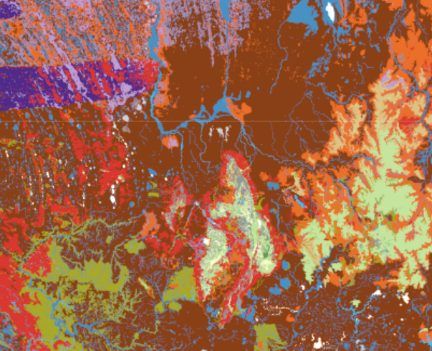 Before 1750
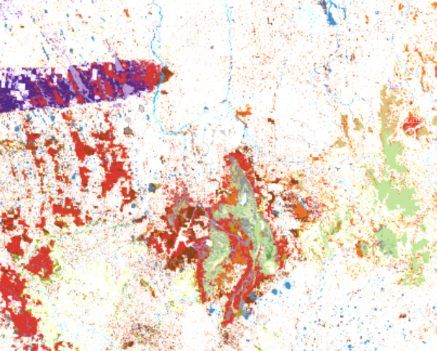 Today
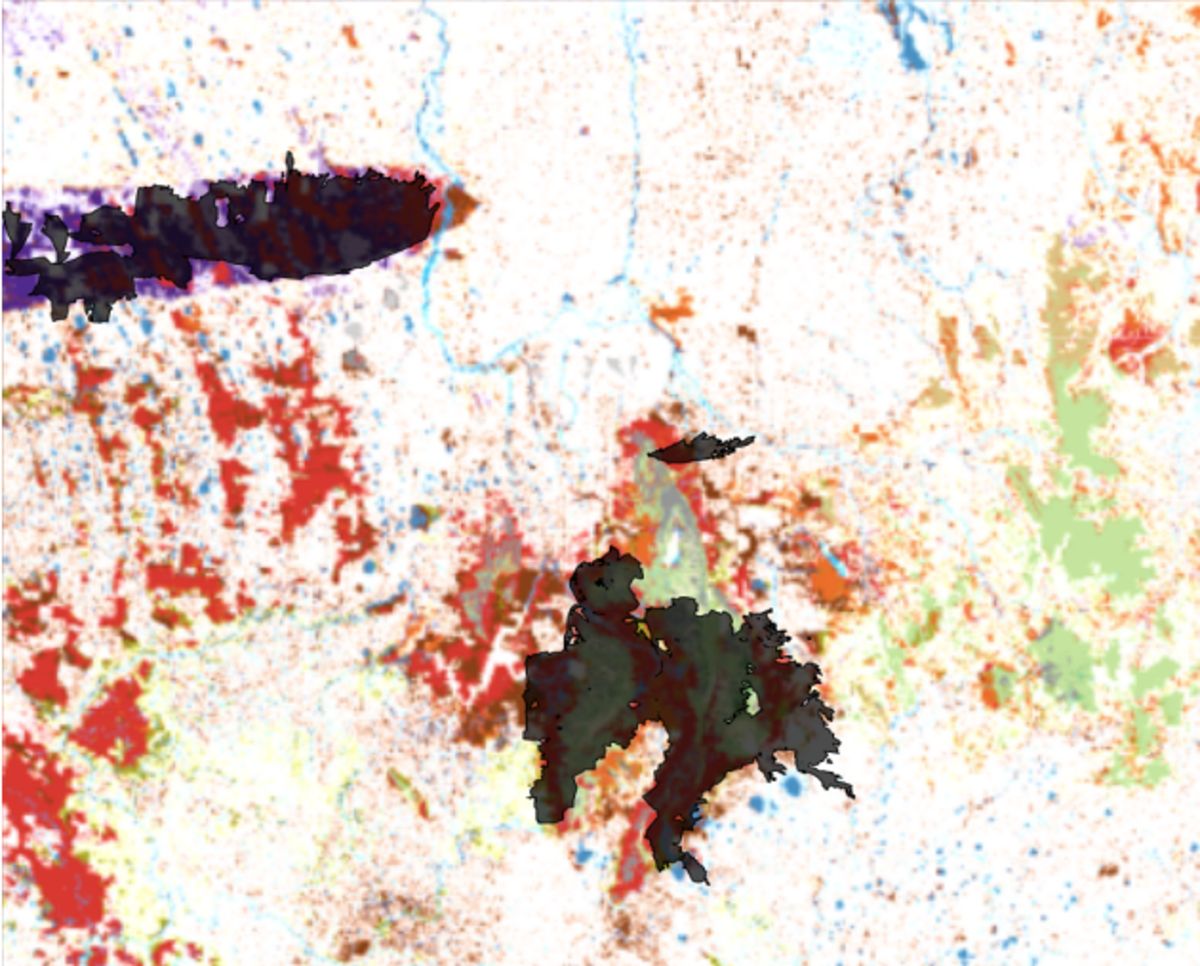 Today, with the 2024–25 fires
Three maps of the same area: native vegetation before 1750, native vegetation remaining today, and today’s remnants with the 2024–25 fire scars in black. Together they show the parks as islands, and how much of each island burnt.
Source: native vegetation layers in DEECA’s NatureKit, and VicEmergency mapping of the 2024 and 2025 fires (via the three slides from Elia’s introduction at the Pomonal ‘reading the landscape’ workshop). Check reuse permissions for the underlying layers.
Much of the land around the parks, near fire edges, is privately owned: remnant habitat on bush blocks, and old habitat trees along roadsides and in paddocks. It could be that your block was only partially affected by fire and still has some intact mature remnant bushland; that country is the refuge wildlife moves into while the parks recover. Or even if your block burnt completely, it may be nearer to bush that survived, or it may have burnt less fiercely than the park thanks to the efforts of firefighters. This means your block may be right on the interface where animals and plants start moving back into the burnt country. What you do there can help that return.