Mapping, prioritising and controlling
Weed control after a fire goes wrong in a predictable way: everything looks urgent, people start at the gate and work inwards, and a year later the roadside infestation is knocked back while the small new one up the back has become the big one.
The fix is to write down what you have and where, before you start spraying. A map lets you prioritise rather than react, tells you where to return to, and shows progress over years — which is most of what keeps anyone going.
Protocol — mapping a weed patch
12- What you need
- A phone with a mapping app, or a printed aerial photo and a pen.
- When
- Whenever you’re walking the block anyway. Different weeds show at different times, so a year of casual mapping beats one big effort in spring.
- For each patch
-
- What it is — photograph it and identify later if unsure.
- How dense — scattered plants, or roughly what share of ground it covers. A rough band is enough.
- How big — walk the outline, or pace it.
- Date and a photo — what lets you judge in two years whether you are winning.
- What you intend to do, and when to check back. The field people skip, and the one that turns a map into a work plan.
- Afterwards
- Record what you did, when, and whether it needs a follow-up. Almost everything does.
The full density band list from the project forms (I have three: sparse individual plants, 10–30% cover, 30–60% cover). Which mapping app should landholders be pointed to, and is there a public version of the Landcare weed mapping form?
Prioritising
- New arrivals first. Small, beatable, and won’t be either in three years.
- Small and isolated before big and established. An outlier you can eliminate outright beats a dent in a large infestation.
- Protect the best country first. Work outward from your highest-value bush, not inward from the fence.
- Work along the spread paths. Uphill and upstream of clean country. Treat the source before the sink.
Project Platypus has a weed prioritisation tool that works this through more formally, weighing how invasive a species is against how much you have and what it threatens.
Keep checking disturbed ground for at least twenty-four months. Many post-fire weeds arrive in the second year, once the ash bed has settled. The people who get caught are the ones who looked in the first spring, saw little, and stopped.
Not bringing more in
After a fire there is more traffic on your place than ever — contractors, fencing crews, gravel, hay, machinery — and nearly all of it is a weed vector. Wash down vehicles, machinery, boots and tools on the way in and out, and use certified weed-free seed, mulch, soil and gravel.
Control: match the method to the plant
What works depends on how the plant stores its energy and moves its seed. Broadly:
- Woody legumes (sallow wattle, blackberry) — fire-triggered seedbanks mean mass germination. Plan for repeat visits across years, not one campaign.
- Perennial grasses (veldt grass) — hardest to see, hardest to kill, easiest to spread on machinery.
- Pioneers (stinkwort, horehound, thistles) — fast on bare ground, but the most tractable group if caught before seed set.
- Bulbs, corms and tubers (cape tulip, weed orchid, arum lily, bridal creeper) — the ones that defeat people, because the plant you can see is not where the energy is. The AABR guide to weeds with underground reproductive structures covers these in detail.
Control techniques, timing and herbicide guidance per species — the Agriculture Victoria Partnerships Against Pests material would cover it. I don’t want to write herbicide advice from general knowledge.
Why the life cycle decides the method
The Bennetts have about twelve hectares at Church Road, half of it under a Trust for Nature covenant. Blackberry is now eradicated; thistles, bridal creeper and arum lily have been worked back. Red ink weed appeared only after the fires. Their two hardest weeds show why biology matters more than technique.
One-leaf cape tulip grows from a corm that can sit 150 mm down and produces one to three new corms a year. About half stay dormant each season and don’t come up at all. One plant sets over a thousand seeds, viable around two and a half years, and takes two to three years to reach flowering age.
So: one pass can never work, because half the population wasn’t above ground. Commit to a multi-year cycle, and get them before seed set every year without fail.
South African weed orchid has tubers only about 5 cm down, so digging genuinely works. It sprouts around June. But it self-pollinates and releases hundreds of thousands of dust-fine airborne seeds from late November, viable seven years or more.
So: the whole game is getting them out before late November — and your neighbours matter, because that seed travels.
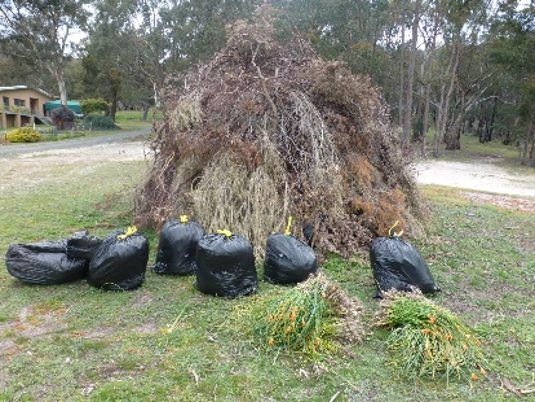
Anything dug up is burnt, or sealed in a black plastic bag and left in the sun: a corm left lying will keep ripening. Where ground is too rocky to dig or numbers too great, they spot spray. Where they can’t reach everything, they knock the flower heads off before seed develops — not a cure, but it buys a year.
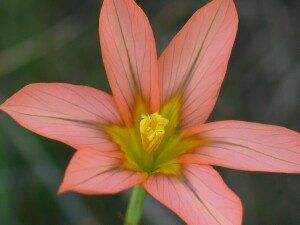 Cape tulip flower
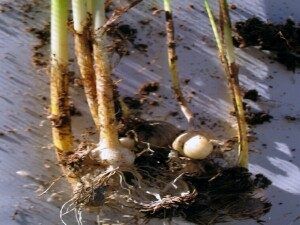 Cape tulip corms
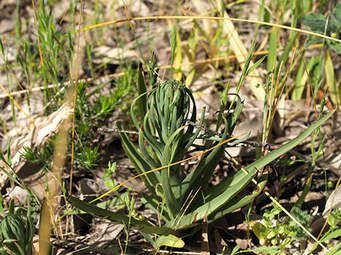 Weed orchid rosette
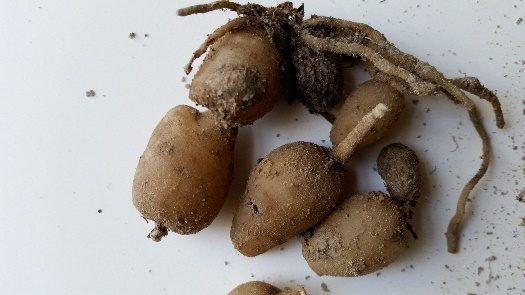 Weed orchid tubers
One-leaf cape tulip and South African weed orchid — whole plant, flower, and the corm or tuber in the hand for scale.
Source: the Bennetts’ workshop slides. Needs sign-off.
The corm and tuber figures for cape tulip and weed orchid, and the germination timings, all need a source — they are currently unattributed.