Boxes, carved hollows and pods
If 4.6 says your block needs more hollows, there are three ways to add them, and they suit different animals.
Nest boxes
The demonstration allocation used in this project was nine boxes per property across three designs — a squirrel glider box, a microbat box, and a small glider or antechinus box — built by the Stawell Men’s Shed. Eighty-one went up across the nine sites.
Three designs rather than one is deliberate. You rarely know what is looking for a hollow until something moves in, and occupancy across different designs is itself the answer (4.6).
Installing and checking boxes
- Where
- In the part of your block with the fewest natural hollows (4.6). Spread them rather than clustering.
- Mounting
- Hang on wire run through poly pipe, or fix with bugle batten screws and a washer. Grease the thread. Whatever you use, allow for the tree growing.
- Height
- Higher is not always better. Put some below three metres so you can actually check them from a ladder — a box you never inspect teaches you nothing.
- Checking
- Once a year, outside breeding season. Record the box, the design, and whether anything is using it. That record is what tells you whether to install more.
- Safety
- Ladder work and working at height carry real risk. Get help, or get someone qualified.
For box designs, dimensions and entrance sizes by target species, see Project Platypus’s nest box resources, which gathers the DELWP, North East CMA, Land for Wildlife and BirdLife Australia guides in one place.
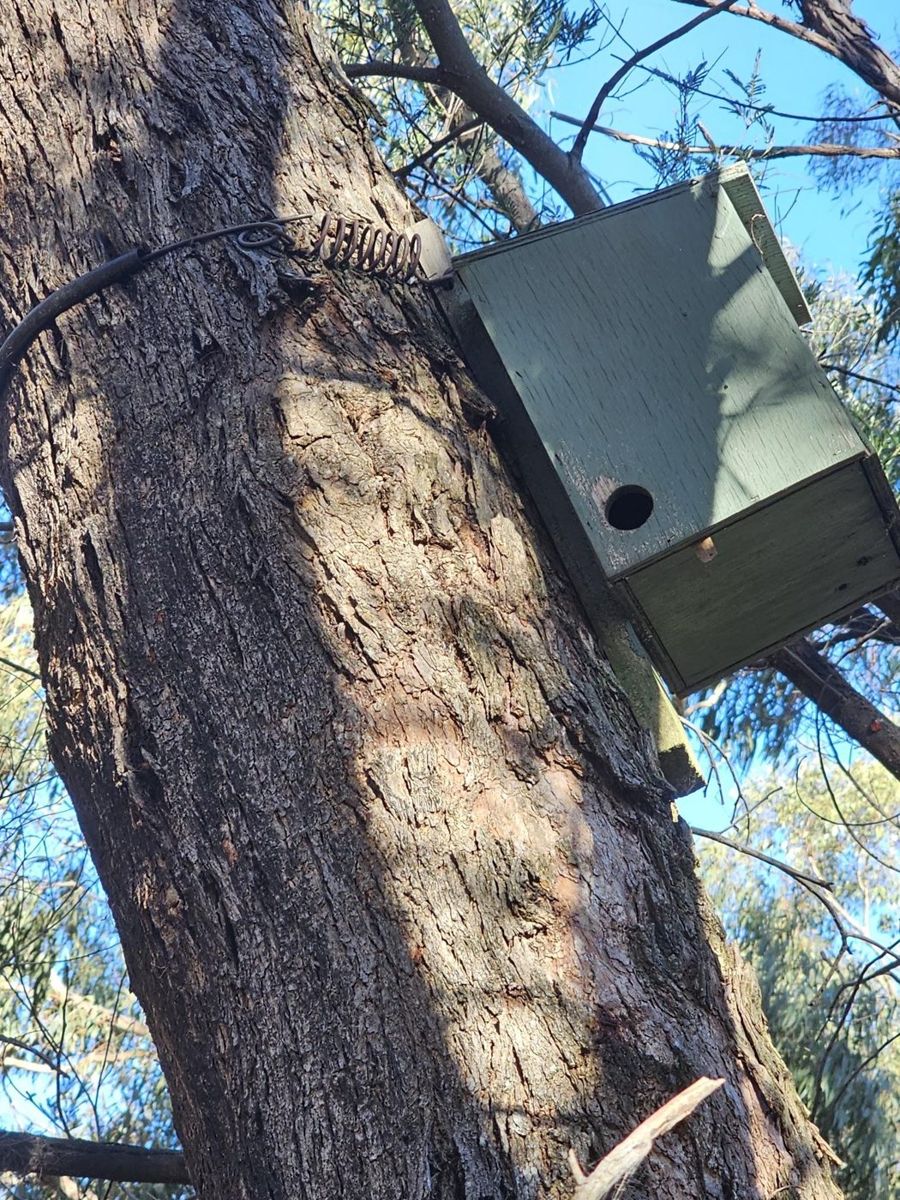
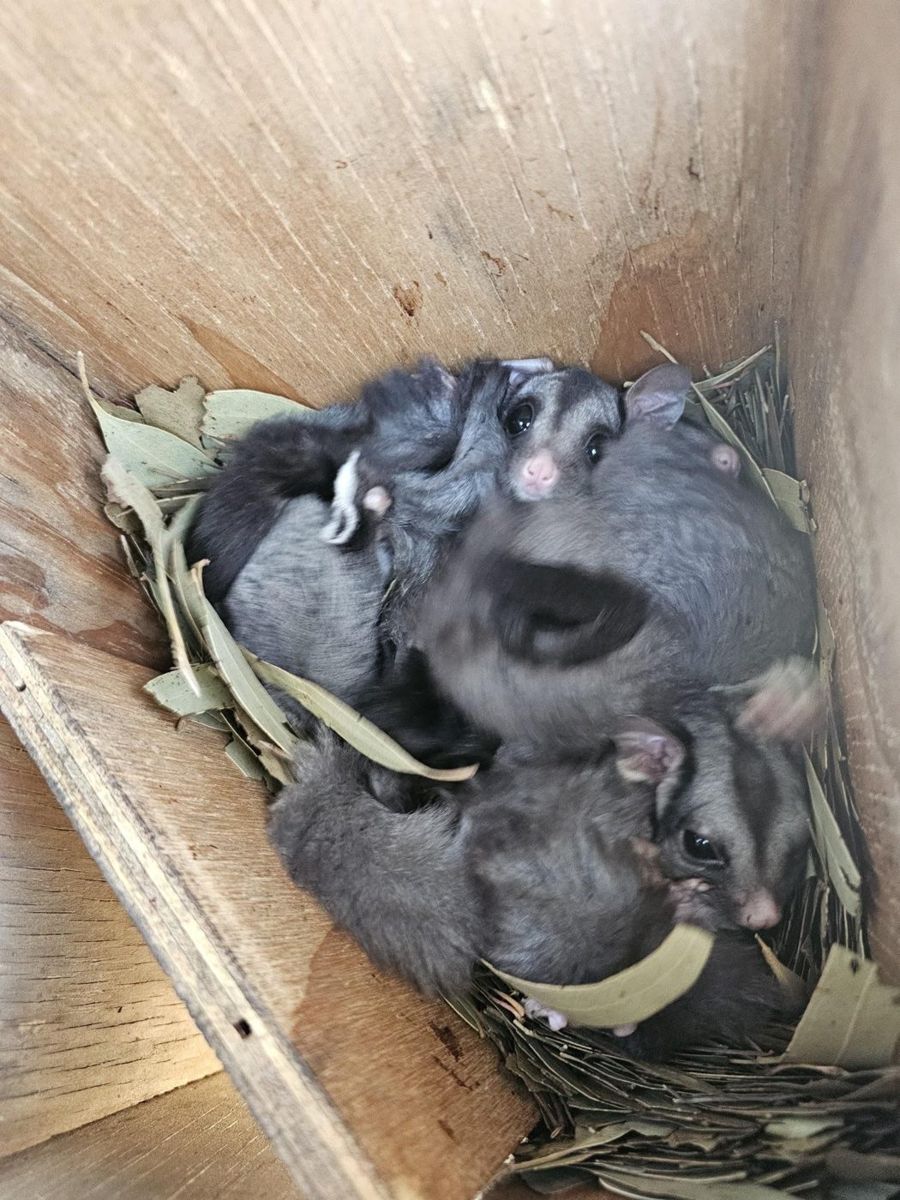
Carved hollows
A hollow can be cut directly into a living tree by a climbing arborist, producing something closer to the real thing than a box: better insulated, longer lasting, and part of the tree rather than bolted to it. It needs a specialist, so it suits a few high-value trees rather than a whole property. Log-box hollows — assembled from a hollowed section of log — are a middle option that a group can build in a workshop.
Habitat pods and ground habitat
Not everything nests in trees. Ground-dwelling mammals and reptiles lose their cover entirely in a severe fire, and ground-level structures help while the understorey rebuilds: habitat pods, tile grids, and basking tiles for reptiles. Trust for Nature supplied eight pods per site to the three Little Desert properties in this project.
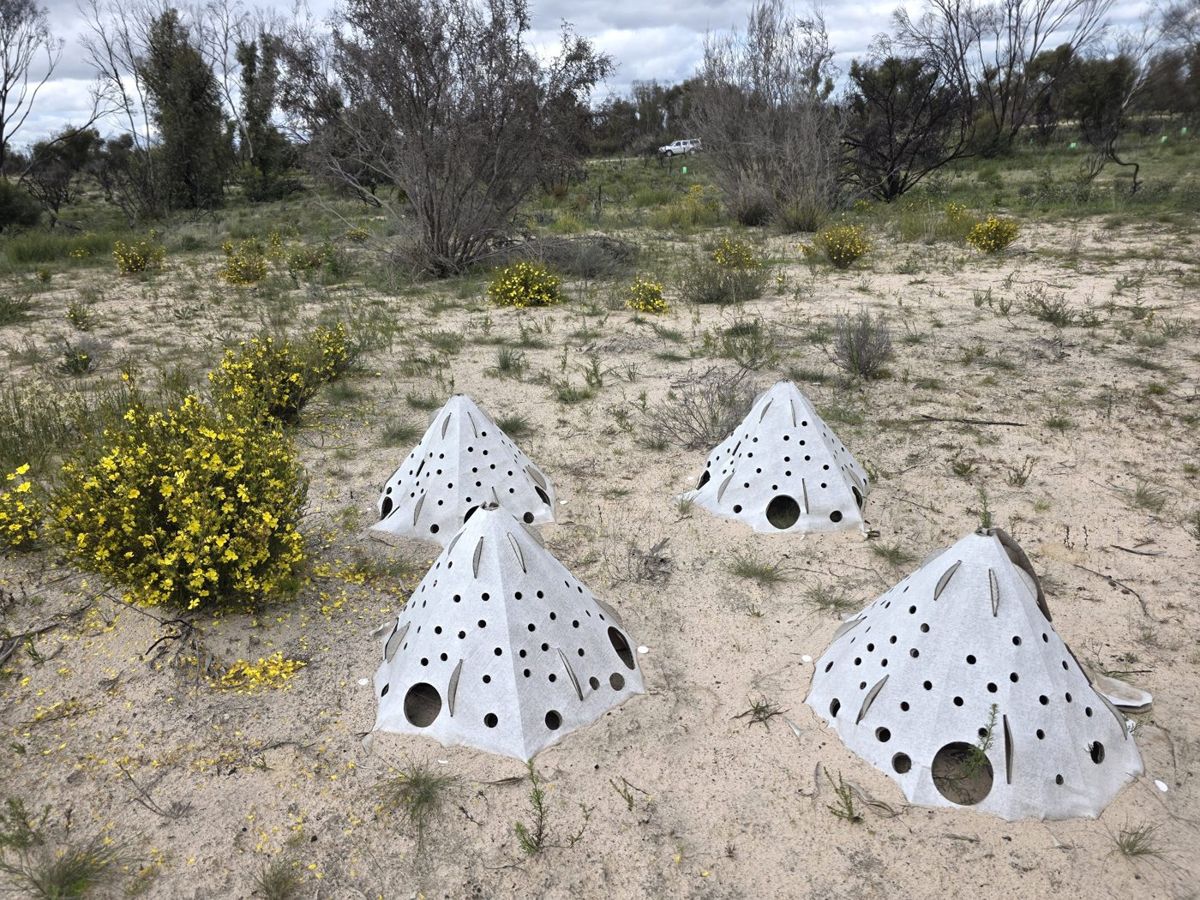
Dimensions and entrance sizes for the three Stawell Men’s Shed designs, and whether we can publish the plans. Also the name of the arborist and hollow-building service to credit for the carved hollows.
One caution to check before recommending habitat pods and log piles unreservedly: Hale and others (2022) report that added rocks and logs can encourage black rat populations. Worth confirming whether that holds in our vegetation types, and saying so if it does.