3.6
Birds the automated way
A listening station is a small weatherproof-cased unit with microphones that records continuously and identifies calls automatically — three-second slices of song turned into a spectrogram, then matched by image recognition. Results appear on a phone app, usually within minutes.12 It runs unattended for months, which is the whole point — see 3.7 for what it can and can’t tell you.
Setting up a listening station
- What you need
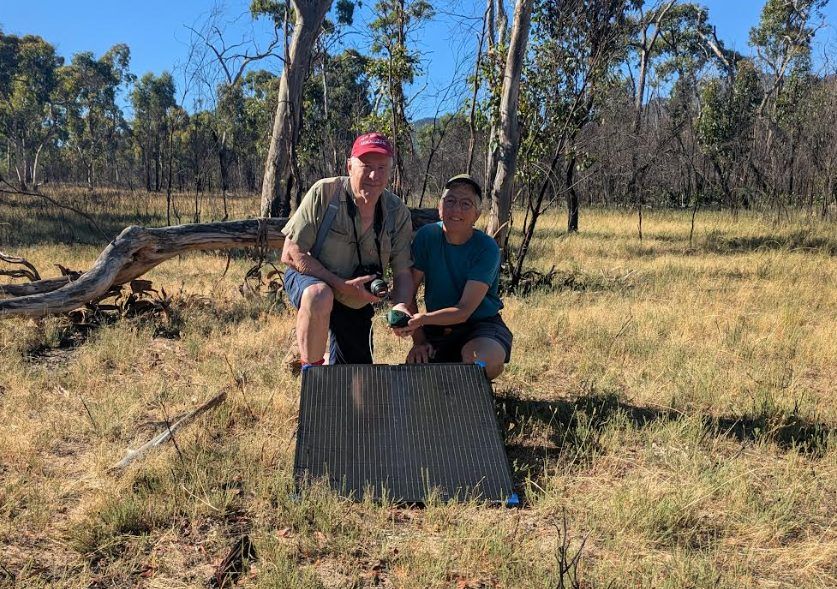
- The unit, a solar panel, and a 4G router with a data-only SIM. Mobile coverage is the usual constraint.
- Siting
- Within earshot of the ground you actually want to know about — the unit hears its own patch, not your property (3.7). Away from constant noise: roads, pumps, spillways. Where the panel gets sun and the router gets signal.
- Mounting
- The casing is weather-resistant, not weatherproof. Mount it so water runs off and it is not sitting in driving rain.
- Checking it
- Open the app once a week and confirm detections are still arriving. Flat batteries after cloudy weeks and dropped mobile coverage are the two common failures, and both are fixable once noticed.
Recordings are kept, so an unusual identification can be listened to and checked, or uploaded to iNaturalist for someone else to confirm.
Needed
Connor’s completed maintenance and troubleshooting sheet, and the “V2” setup notes for sites with poor mobile coverage. Also current unit and running costs, to put a figure in this section.