Do I need to replant?
The most common question after a fire, and the answer is nearly always not yet.
Planting into regenerating ground is one of the few genuinely counterproductive things you can do. The seedlings you can’t see yet are competing with what you put in, tubestock brings its own weed seed and genetics, and the money is gone at the point where weed and browsing control would buy you far more.
Decision — do I need to replant?
- 1 — Wait a full growing season, ideally two
- The first spring after the fire is when most of what will return appears, and some of it appears only then (section 2.2).
- 2 — Record what comes up
- Walk the block and photograph one of everything (section 3.2). You are building a list, not identifying on the spot.
- 3 — Compare against what should be there
- Your pre-1750 vegetation type (section 1.2), or any species list recorded before the fire.
- 4 — Ask what is actually missing
- Not “does it look bare”, but: is a whole layer absent two seasons on, or a species you know was there?
- 5 — Then plant, into the gap
- Targeted, not spread across the paddock.
Good reasons to plant
- A species burnt out locally — most likely where two fires fell inside the minimum interval (section 1.4) and a seeder never returned.
- A structural layer still absent after two seasons, shrubs especially.
- Connectivity — linking two patches so animals can move between them.
- Erosion — actively moving soil. Urgent, and properly soil stabilisation rather than revegetation.
Reasons that aren’t
- It looks bare. It will, for a while.
- You want to be doing something. There is plenty to do — see below.
- There is funding for plants. Funding is not a diagnosis.
If you do plant
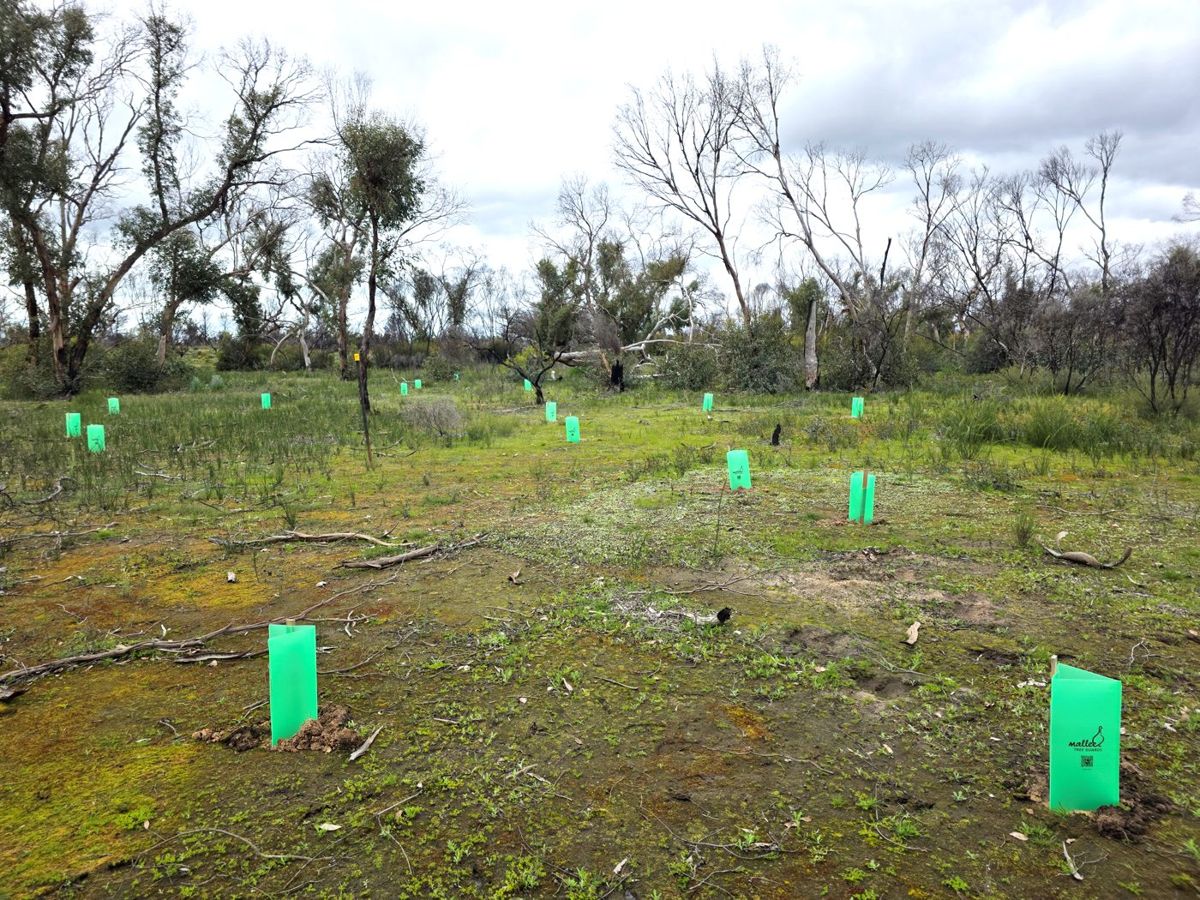
Match the vegetation type — your EVC benchmark (section 1.2) lists what belongs. Use local provenance stock, and weed-free mulch, soil and gravel (section 4.3). Plant into gaps rather than across regenerating ground, and guard against browsing, or you are running a feeding station for deer and rabbits.
Protect what survived, control the weeds coming through the ash bed, deal with browsing pressure, and set up the monitoring that will tell you in two years whether anything is missing. Part 5 puts that in order.
This section still tells people to use the EVC benchmark for species lists, which Yasmin Kelsall specifically advised against — queued for correction along with 1.2.