Hollows
More than 300 Australian vertebrate species depend on tree hollows — around 114 birds, 83 mammals, 79 reptiles and 27 amphibians.1 They use them for nesting, breeding, shelter, and escape from predators and weather.
Hollows cannot be hurried
Hollows form slowly, through fire scars, branch loss, fungal decay, insect activity and plain weathering. Typical formation times:
| Hollow size | Years to form | Typical users |
|---|---|---|
| Small (under 5 cm) | 80–120 | Small parrots, microbats, small marsupials |
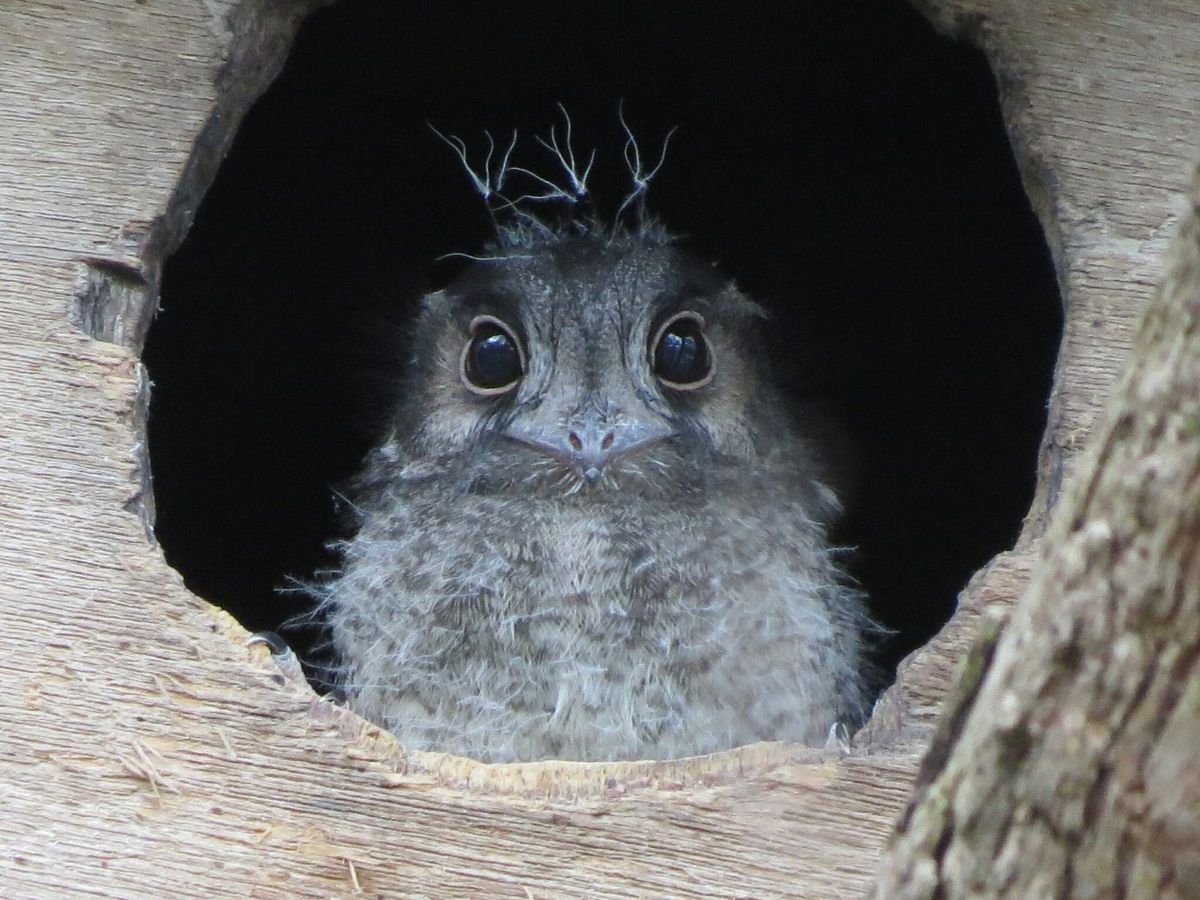
| Medium (5–10 cm) | 120–180 | Larger parrots, possums, owlet-nightjars |
| Large (over 10 cm) | 180–300+ | Cockatoos, owls, large possums |
A hollow-bearing tree lost today cannot be replaced in a human lifetime. That single fact drives most of what follows.
What fire does
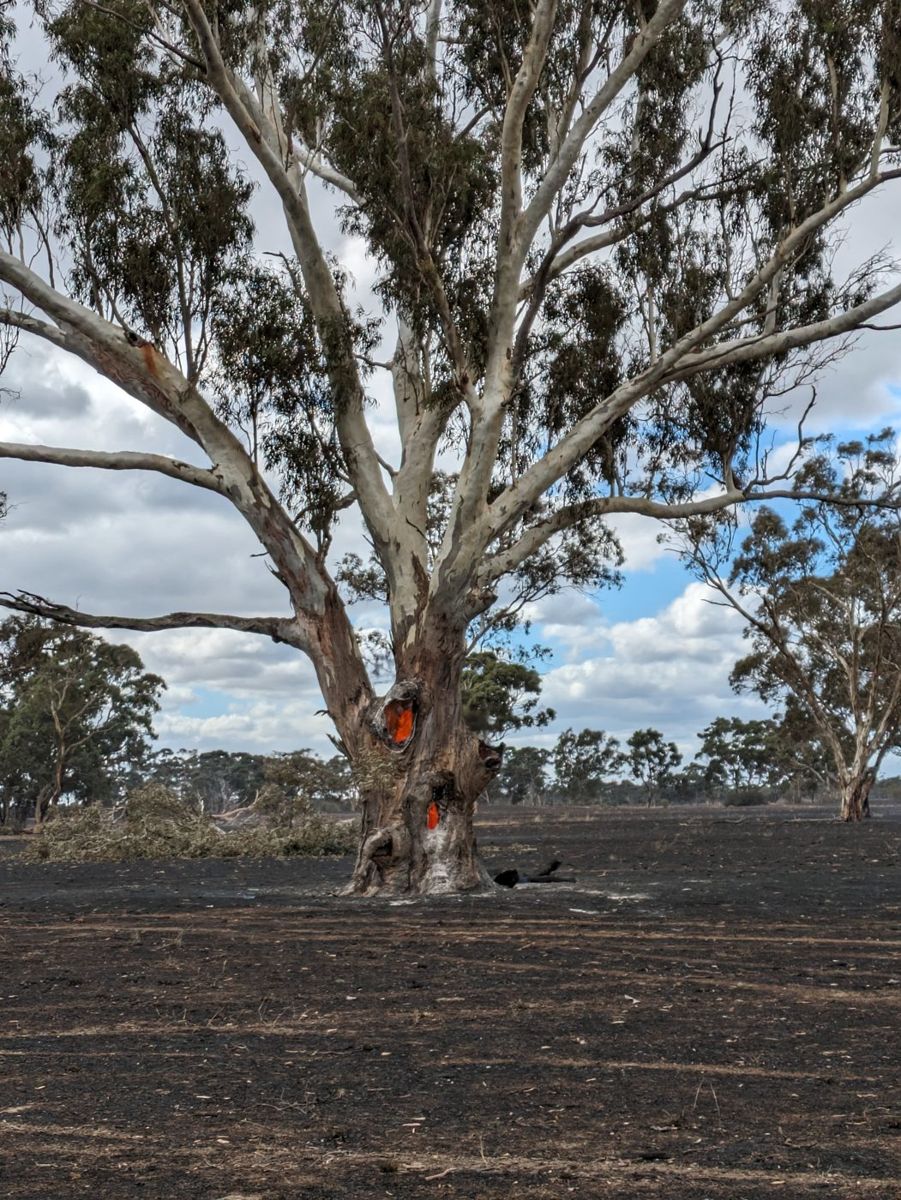
Fire both makes and destroys hollows. Scars begin the decay that eventually forms one, and historically patchy, low-severity fire was part of how hollows came about. But severe fire collapses hollow trunks, brings down limbs and kills ancient trees outright — and it does that far faster than new hollows appear.
After a severe fire, hollow availability often drops, at least for a while, and competition for what remains rises. But a burnt tree is not necessarily an empty one. Fire can open new hollows in scarred trunks and limbs, and trees killed by fire can go on forming hollows for decades as they decay. The trees on your place that carry hollows now, burnt or unburnt, are doing work for a wide area.
What to do
- Keep standing dead trees. Stags are often the best hollow trees on a property and are the first thing people tidy up. Where they can safely be kept, keep them (see 0.1 on hazard trees).
- Keep old paddock trees. A single large old tree in the open may hold more hollows than a hectare of regrowth.
- Leave fallen timber where it lies. Logs are ground-level habitat, and after fire there is very little other cover.
- Only then consider adding hollows — and work out first whether you need to (4.6).